// BIOSTAT · Emulsion concentrate (EC) · 220 ± 10 g/l
220 g/l of coriander essential oil. Insecticide, acaricide, fungicide.
A bio-rational pesticide on coriander essential oil, diluted in water for spraying. Effect from 1 hour, protection for 15 days, harvest after 3.
(+)-Linalool, 65–70% of the oil.
The active substance is coriander essential oil — a mixture of terpenes by its ISO name, chemical class alkadienes. The registration dossier lists fourteen components by mass fraction; the main one, (+)-linalool (3,7-dimethyl-1,6-octadien-3-ol), is 65–70% of the oil. The solvent of the concentrate is ethyl alcohol; the emulsifier is OP-10.
3,7-dimethyl-1,6-octadien-3-ol Ball and stick
● C ○ H ● O Fig. 1
(+)-Linalool, the main component of coriander essential oil; the hydroxyl oxygen marked.
| Component | Share | Mass % |
|---|---|---|
| (+)-linalool | ~65–70 | |
| (+)-α-pinene | 8–12 | |
| (+)-β-pinene | 0.5–1 | |
| myrcene | 0.5–1 | |
| camphene | 0.5–2 | |
| (±)-limonene (dipentene) | 0.5–3 | |
| α-terpinene | 0.5–1 | |
| γ-terpinene | 1.5–3 | |
| terpinolene | 0.5–1 | |
| p-cymene | 0.5–1.5 | |
| camphor | 3–6 | |
| (−)-borneol | 1–3 | |
| geraniol | 3–9 | |
| methylheptenone | 0.1–3 |
The bracket spans each range on a 0–100% scale.
Nine crops,
from winter wheat
to grape.
The registration dossier's scope, crop by crop, with the Latin names as the dossier writes them. Grape's downy mildew and leaf-form phylloxera appear in the dossier's rate table rather than its scope list; they are shown here and marked.
| Crop | Situation | Pests | Diseases |
|---|---|---|---|
| Winter wheat | — | sunn pest Eurygaster integriceps; greenbug Schizaphis graminum | brown rust (Puccinia); septoria (Septoria nodorum, S. tritici); root rots (Helminthosporium sativum, Fusarium culmorum, Ophiobolus graminis and others) |
| Tomato | protected ground | two-spotted spider mite Tetranychus urticae; aphids (Aphis frangulae, Myzodes persicae, Aphis gossypii); thrips (Thrips tabaci, Heliothrips haemorrhoidalis) | — |
| Tomato | open ground | cotton bollworm Heliothis armigera; aphids | — |
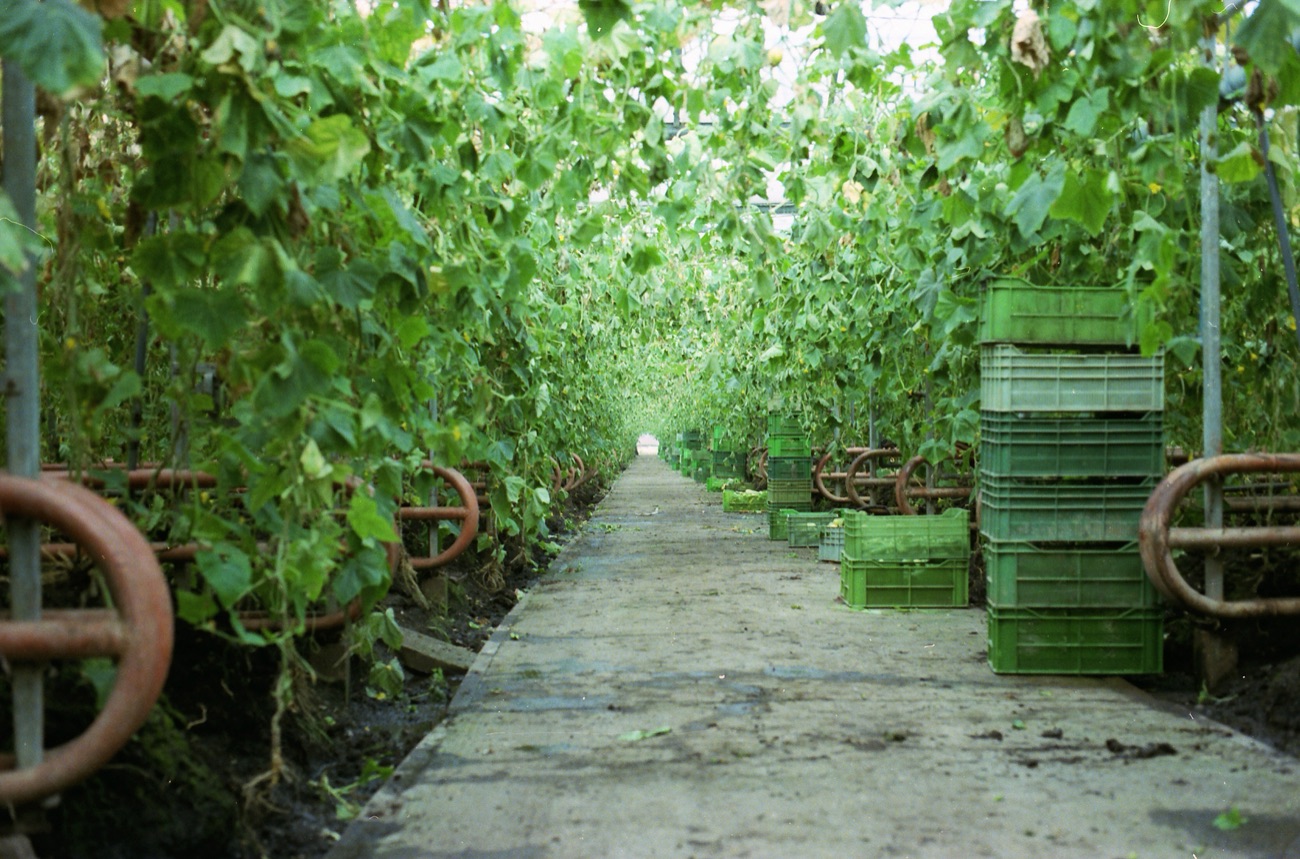
| Cucumber | protected ground | two-spotted spider mite Tetranychus urticae; aphids (Aphis frangulae, Myzodes persicae, Aphis gossypii); thrips (Thrips tabaci, Heliothrips haemorrhoidalis) | — |
| Cucumber | open ground | aphids | — |
| Watermelon | — | aphids | — |
| Melon | — | aphids | — |
| Tobacco | — | cotton bollworm; tobacco (peach) aphid Myzodes persicae; tobacco thrips | — |
| Apple | — | San José scale Diaspidiotus perniciosus; Aphis pomi; mites (Panonychus ulmi, Bryobia redikorzevi); fall webworm Hyphantria cunea | scab Venturia inaequalis |
| Peach | — | aphid Myzodes persicae | leaf curl Taphrina deformans |
| Grape | — | Tetranychus urticae; phylloxera, leaf form (rate table) | powdery mildew (oidium) Uncinula necator; downy mildew (rate table) |
Nine crops, as the dossier's scope list names them; tomato and cucumber are listed twice, for protected and for open ground; where the dossier states no situation the cell carries a dash.
93–99% on mites.
56–59% on sunn pest.
Both rows stay.
Thirteen rows, as the dossier lists them and in its order. The strongest is mites in protected vegetables; the weakest is sunn pest in winter wheat. Neither is moved.
| Crop / situation | Target | Range | Efficacy |
|---|---|---|---|
| Vegetables, protected ground | aphids | 72–98% | |
| Vegetables, protected ground | thrips | 70–80% | |
| Vegetables, protected ground | mites | 93–99% | |
| Vegetables, open ground | aphids | 88–92% | |
| Tomato, open ground | cotton bollworm | 70–88% | |
| Melons and gourds | aphids | 88–98% | |
| Peach | aphids | 88–95% | |
| Peach | leaf curl | 70–98% | |
| Tobacco | aphids | 83–85% | |
| Tobacco | cotton bollworm | 83–86% | |
| Tobacco | thrips | 87–92% | |
| Wheat | root rots, brown rust, septoria | 70–80% | |
| Wheat | sunn pest | 56–59%Kept on the page |
Biological efficacy by crop and target, in the order and wording of the registration dossier; also reported in the product description and the company deck.
0.3–0.6 l/ha in the field.
0.75–1.5 in orchards and vineyards.
Product per hectare, by vegetation treatment: field crops 0.3–0.6 l/ha; orchards and vineyards 0.75–1.5 l/ha; greenhouses 0.3–0.75 l/ha. Household plots: 8–10 ml per 100 m² in open ground, 8–10 ml per 100 m² in protected ground, 10–15 ml per 100 m² on shrubs and in orchards.
Rate by crop
| Crop | Targets | l/ha |
|---|---|---|
| Tomato | mites, aphids, cotton bollworm | 0.3–0.6 |
| Cucumber | aphids, mites, thrips | 0.3–0.6 |
| Melons and gourds | aphids, mites | 0.3–0.6 |
| Peach | leaf curl | 0.75–1.5 |
| Apple | scab, San José scale, mites | 0.75–1.5 |
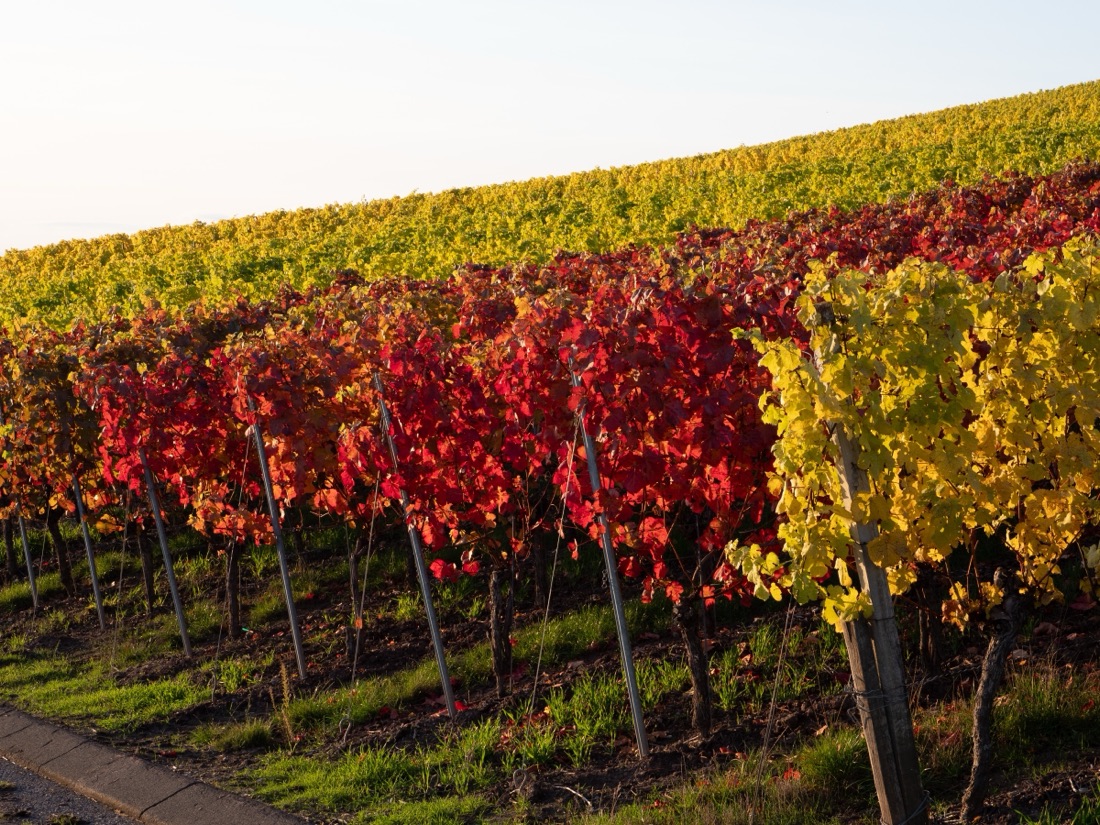
| Grape | oidium, downy mildew, phylloxera (leaf form) | 0.75–1.5 |
| Tobacco | cotton bollworm, aphids, thrips | 0.75–1.2 |
| Cabbage | aphids | 0.45–0.75 |
| Winter wheat | brown rust, septoria, root rots | 0.75–1.5 |
Table 1 of the dossier. It carries a cabbage row that the dossier's scope list does not name; it is reproduced as printed.
| Crop | May | Jun | Jul | Aug | Sep | Treatments · interval |
|---|---|---|---|---|---|---|
| Cereals | May–August | 2–3 · every 10–15 days | ||||
| Vegetables | May–August | 3–4 · every 20 days | ||||
| Tobacco | May–August | 3–4 · every 20 days | ||||
| Apple, peach | May–August | 3–4 · every 20 days | ||||
| Grape | May–September | 3–5 · every 20 days | ||||
Table 2 of the dossier. Tobacco, apple, peach and grape take the 20-day interval from the vegetables row by ditto marks in the source.
Working solution
- Field crops300–400 l/ha against diseases; 400 l/ha against pests.
- Orchards and vineyards1,000–1,200 l/ha.
- Greenhouses200–500 l/ha.
- Household plots3–4 l per 100 m² for vegetables and flowers; 10 l per 100 m² for garden crops.
Tank-mix compatible.
Not with microbiological preparations.
Compatible in tank mixes with chemical insecticides, fungicides, herbicides and fertilisers; not compatible with microbiological preparations. Recommended in integrated plant protection.
Equipment
- Hand-heldportable sprayers.
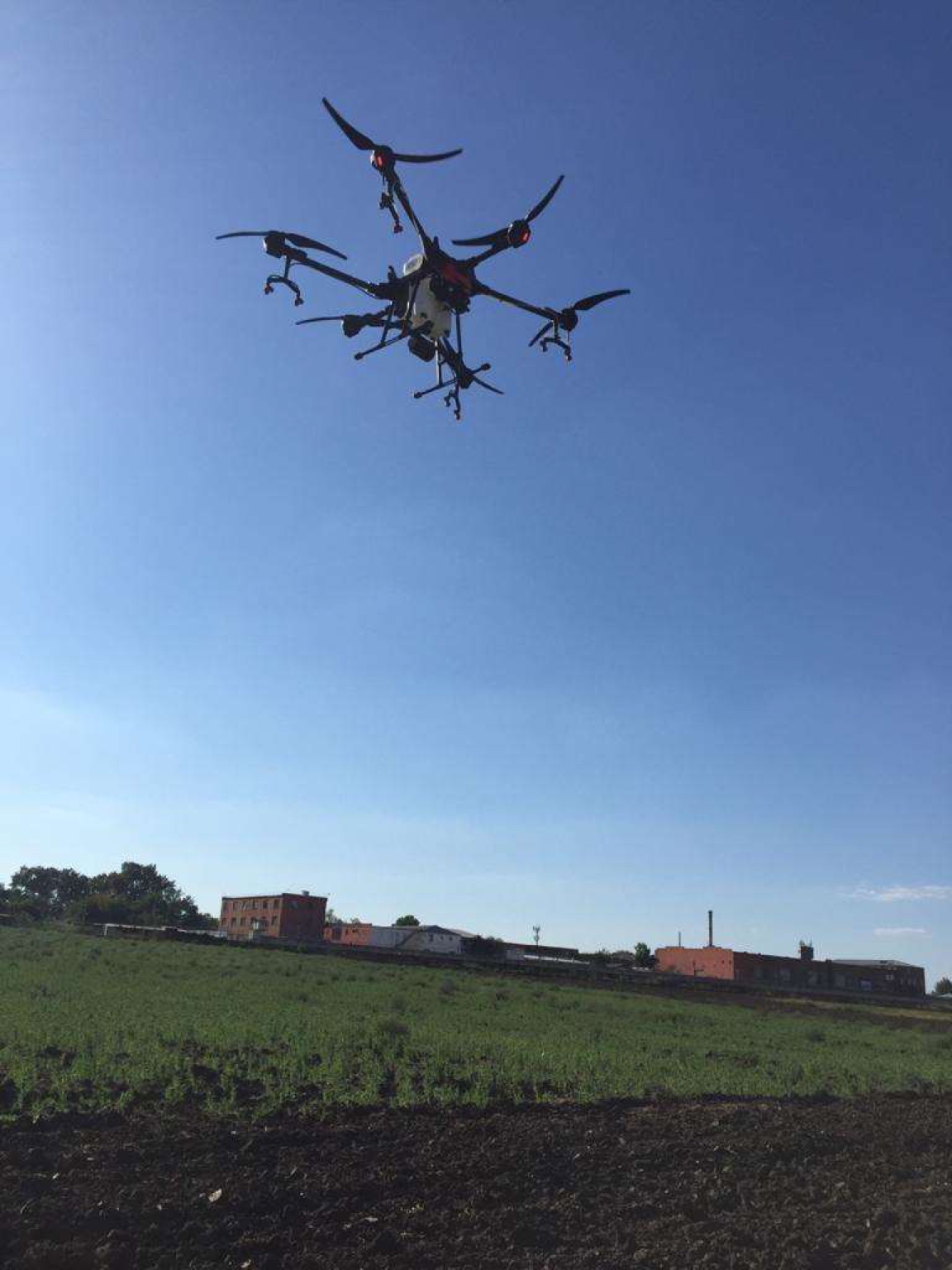
- UAVultra-low-volume (ULV) sprayers on unmanned aerial vehicles (UAVs); a DJI Agras T-16 in the oak trial.
- Orchardfan sprayers, tested.
- Fieldboom sprayers, tested.
- Systemscompatible with standard spraying systems.
Mode of action
Systemic: works through the whole plant. The product description reports no resistance developing in pathogens.
Volatile organic compounds of biogenic origin with fumigant, repellent, antifeedant and attractant activity towards pest insects and mites, and kairomone activity for entomophages and acariphages. Field-proven against tetranychid (spider) mites, many aphid species, bugs, the oak, plane and pear lace bugs, and thrips.
Hazard class 3. Flash point 62 °C.
Low toxicity — hazard class 3 (moderately hazardous) under GOST 12.1.007, the Russian state standard; oral LD50 (median lethal dose) 4,370–4,490 mg/kg for the formulation. Where a study has not been done, the row says so. The toxicology was performed by the Moscow Institute of Medical Parasitology, Tropical and Transmissible Diseases.
Physico-chemical
- AppearanceColourless or yellowish liquid with the smell of ripe coriander fruit.
- Vapour pressure10ppm at 20 °C20ppm at 40 °C
- Density0.864–0.878kg/l
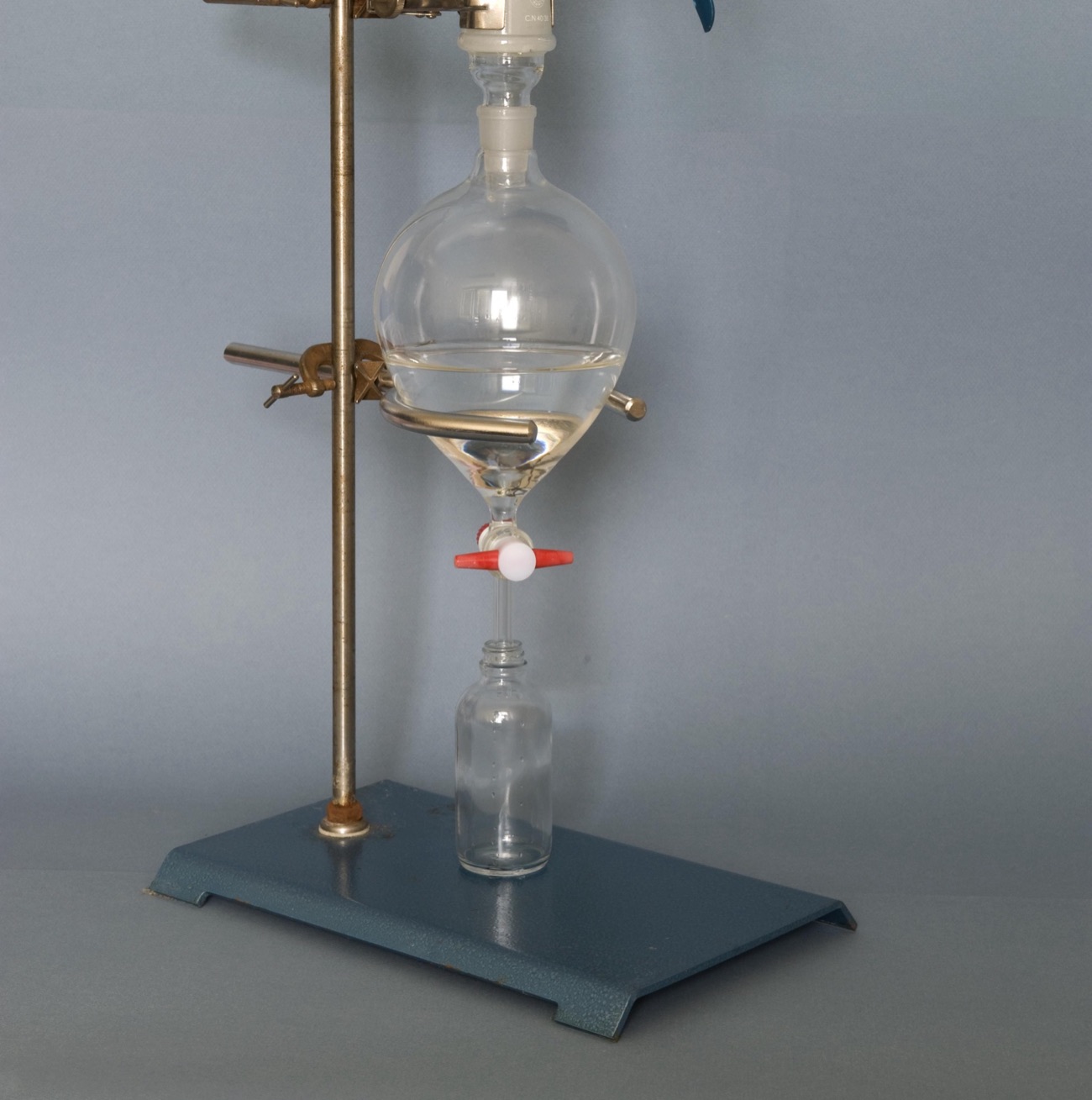
- SolubilityInsoluble in water; up to 5,000 mg/100 ml in alcohols; readily soluble in other organic solvents.The concentrate is emulsified in water for spraying.
- Flash point62°C
- Ignition temperature243°C
- FireFire- and explosion-hazardous.
- Boiling and freezing pointNo data.
- Melting pointNot applicable — a liquid.
- SolventEthyl alcohol; LD50 5,700 mg/kg, mice.
- EmulsifierOP-10.
Active substance — linalool, more than 65% of the oil
- Oral LD50, acute3,500mg/kgmice (5 males, 5 females) — hazard class 3, GOST 12.1.007-88
- Dermal LD50, acute> 9,000mg/kghighest dose tested
- Skin irritationnone detected
Formulation — BIOSTAT, emulsion concentrate
- Oral LD50, acute, 5% aqueous solution4,490mg/kg rats · 4,370mg/kg micehazard class 3, GOST 12.1.007-88
- Dermal LD50, acute> 2,500mg/kghighest dose tested
- Skin irritationnone on single application
- Eye mucosa10%threshold concentration of the aqueous emulsion for local irritant action
- Excretion with milknot requirednot used on fodder crops or livestock
- Bees and entomophagesnot toxicStated in the company’s partner deck; the registration dossier reports no bee-toxicity study.
Studies per Methodological Guidelines No. 4263-87 (13.03.1987) and No. 4000-85 (04.11.1985); outbred white mice 18–20 g, white rats 180–200 g, rabbits 2.5–3.0 kg.
Handling
- PPEpersonal protective equipment (PPE): protective goggles, GOST 12.4.013-85E; respirator, GOST 12.4.041; rubber gloves, GOST 20010. Safety rules for hazard-class-3 pesticides.
- After workwash hands and face with soap. Skin: rinse with running water and soap. Eyes, mouth, nose: rinse with running water.
- In soilthe product degrades; the dossier reports no harmful residues in soil, water, plant or produce, and no interference with existing crop rotations.
The dossier — composition, physico-chemical data, biology, application, toxicology — is available on request.