Active substance220 ± 10g/l
Coriander essential oil, (+)-linalool ~65–70%, as an emulsion concentrate (EC) diluted in water for spraying.
// BIOZAR LLC · Krasnodar Krai, Russia · essential oils · BIOSTAT
BIOZAR makes coriander, fennel, dill, chamomile and fir oil. BIOSTAT is its insecticide, acaricide and fungicide on coriander essential oil — patented, listed for nine crops in its registration dossier, and field-tested against the oak lace bug by drone.
BIOSTAT Evidence Essential oils Contact
ScrollAn oak canopy seen from below, its leaves eaten to lace by the oak lace bug, healing over seven days to the trial's figures: 26.6% on day 1, 90.8% on day 3, 98.5% on day 7.
// Field trial · oak lace bug · Corythucha arcuata · North-West Caucasus, 2016–2020Invasion area may exceed 7 million ha — the report's estimate
Seven days after one drone pass of Biostat MK at 3.0 l/ha, the oak lace bug is down 98.5% against the untreated control and the leaf surface is recovering. BIOSTAT is an insecticide, acaricide and fungicide on coriander essential oil, in the registration dossier for nine crops from winter wheat to grape. Patent RU 2762422.
Biostat MK · DJI Agras T-16 · ultra-low-volume (ULV) sprayer · 3.0 l/ha. Reduction of adults and larvae against the untreated control, oak stands, third ten-day period of August.
BIOSTAT's registration dossier lists nine crops — winter wheat, tomato, cucumber, watermelon, melon, tobacco, apple, peach and grape — and thirteen efficacy rows against aphids, mites, thrips, cotton bollworm, sunn pest, leaf curl, brown rust, septoria and root rots. The weakest row is set at the same size as the strongest.
| Crop / situation | Target | Range | Efficacy |
|---|---|---|---|
| Vegetables, protected ground | aphids | 72–98% | |
| Vegetables, protected ground | thrips | 70–80% | |
| Vegetables, protected ground | mites | 93–99% | |
| Vegetables, open ground | aphids | 88–92% | |
| Tomato, open ground | cotton bollworm | 70–88% | |
| Melons and gourds | aphids | 88–98% | |
| Peach | aphids | 88–95% | |
| Peach | leaf curl | 70–98% | |
| Tobacco | aphids | 83–85% | |
| Tobacco | cotton bollworm | 83–86% | |
| Tobacco | thrips | 87–92% | |
| Wheat | root rots, brown rust, septoria | 70–80% | |
| Wheat | sunn pest | 56–59%Kept on the page |
Biological efficacy by crop and target, in the order and wording of the registration dossier; also reported in the product description and the company deck.
Every figure below is from the registration dossier signed by the company's scientific supervisor. Where a study has not been done, the cell says so.
The full specificationCoriander essential oil, (+)-linalool ~65–70%, as an emulsion concentrate (EC) diluted in water for spraying.
Effect from 1 hour after treatment. Systemic: works through the whole plant.
10–25 depending on the pest, its density and generation speed.
5 days in greenhouses.
Field crops 0.3–0.6; orchards and vineyards 0.75–1.5; greenhouses 0.3–0.75.
Moderately hazardous under GOST 12.1.007, the Russian state standard. Oral LD50 (median lethal dose) of the formulation 4,370–4,490 mg/kg.
Coriander essential oil and α-pinene, mass ratio 1:4 to 4:1.
Compatible with chemical insecticides, fungicides, herbicides and fertilisers; not with microbiological preparations.
Not phytotoxic at recommended doses; above them, flower burns are possible.
Flash point 62 °C, ignition temperature 243 °C; fire- and explosion-hazardous.
Eight preparations — three Biostat compositions and five single oils — applied by backpack sprayer and by an unmanned aerial vehicle (UAV), third ten-day period of August. Pre-treatment counts 7–36 individuals per leaf; untreated control 15–30. Efficacy is the reduction in pest numbers against the control. Photosynthetic capacity was read by multispectral sensing before treatment and 7 and 14 days after.
Biostat M — coriander oil. Biostat MS — coriander, fennel and dill oils. Biostat MK — coriander oil with α-pinene and fennel oil; the proportions are not given in the report.
The trial in full, with the leaf strips| Variant | l/ha | Day 1 | Day 3 | Day 7 |
|---|---|---|---|---|
| Biostat MKUAV, ULV | 3.0 | 26.6 | 90.8 | 98.5 |
| Coriander oilBackpack | 2.0 | 36.1 | 70.6 | 96.7 |
| Fir oilBackpack | 2.0 | 70.2 | 87.4 | 88.9 |
| Fennel oilBackpack | 3.0 | 66.8 | 86.6 | 96.8 |
| Dill oilBackpack | 3.0 | 51.4 | 79.2 | 95.8 |
| Chamomile oilBackpack | 2.0 | 40.9 | 75.8 | 94.1 |
| Biostat MBackpack | 2.0 | 35.0 | 68.2 | 95.4 |
| Biostat MSBackpack | 2.0 | 76.6 | 76.6 | 94.1 |
Biological efficacy, %: death of adults and larvae against the untreated control. Biostat MK applied by a DJI Agras T-16 with a ULV sprayer; the seven others by a Pulverex backpack sprayer.
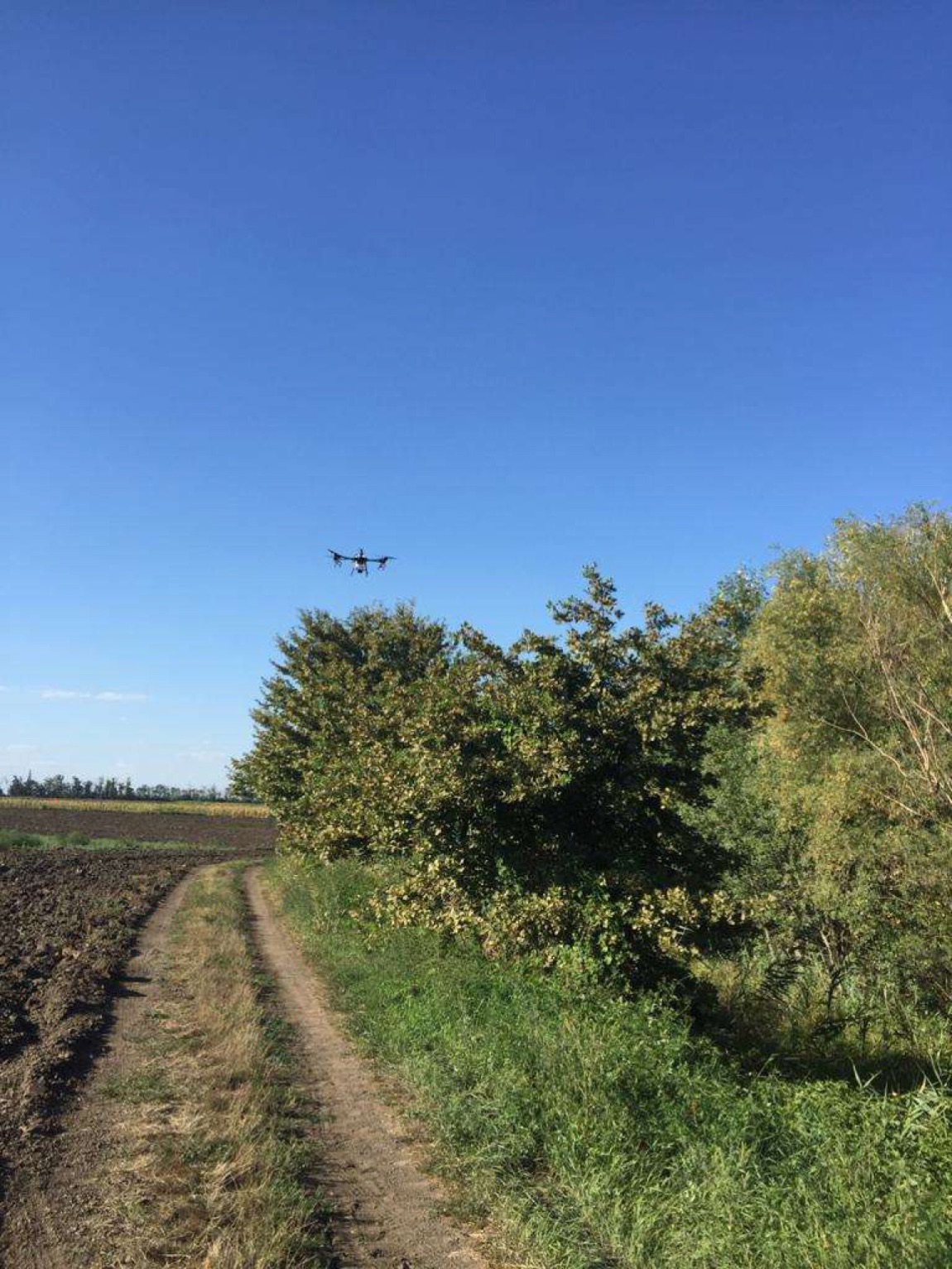
Ultra-low-volume spraying of oaks standing in mixed forest, dosed to the tree. BIOSTAT is also applied with hand-held sprayers, orchard fan sprayers and field boom sprayers, and is compatible with standard spraying systems.
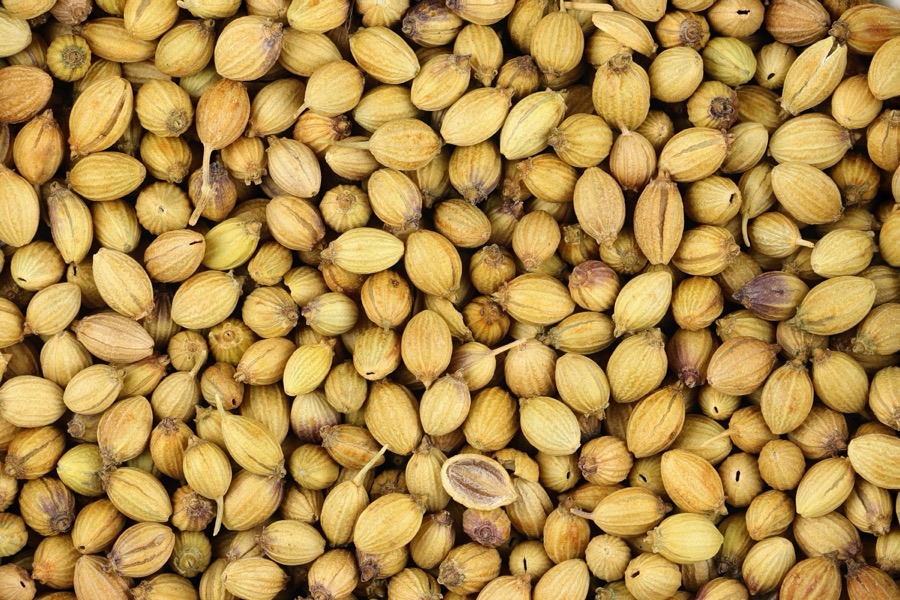
Mass fractions of the coriander essential oil, the six largest of fourteen.
Where the company's partner deck states a higher acute-toxicity figure, it is not used on this site; the registration dossier's figures are.
Field trials of the preparations, led by its head Vladimir Yakovlevich Ismailov — Candidate of Biological Sciences, leading researcher and the scientific supervisor of BIOZAR LLC, who signed the registration dossier.
Toxicology of the active substance and of the formulation.
“An insecto-acaricidal composition characterised in that it comprises coriander essential oil and α-pinene in a mass ratio from 1:4 to 4:1.” Covers the composition and its extraction.
The institute and the patent5 contracts.
1 contract.
6 contracts, 2 buyers, 2 countries — the United Kingdom and Switzerland — August–November 2021.
Directions, not capacity
Growing essential-oil crops on up to 500 ha of irrigated land — a preliminary agreement with a landowner — and distilling oil from fresh-cut herbage in the off-season.
Fennel and dill hydrolates, up to 200,000 l/year.
Coriander meal, dried and granulated — interest from beef and dairy cattle farms.
Spices for the food industry.
Bottled drinking water with fennel and dill hydrolates; groundwater licence for up to 500 m³ — period not stated in the source.
Development directions from the plant's own document. None is delivered capacity.



The registration dossier, the field-trial report and the export record are available on request. BIOZAR LLC, Krasnodar Krai, Russia.